Why Your Teens Won't Cook
(And why “teaching them” was the wrong strategy all along)
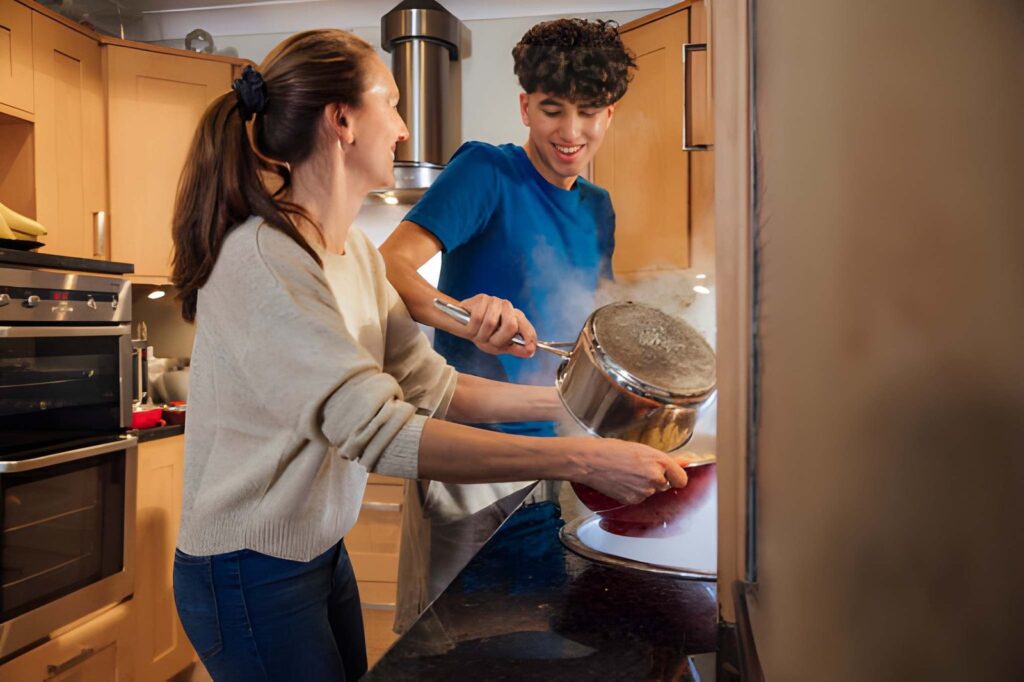
I used to think that if I just sat my teenagers down and taught them how to sauté an onion or follow a recipe, the “Witching Hour” would vanish.
I was wrong.
Every time I tried to “teach,” I saw their eyes glaze over. To a teenager, a traditional recipe looks like a chemistry final.
And to a tired mom, being an instructor feels like even more work than just doing it yourself.
I realized there were three “Walls” keeping my kids helpless and me exhausted. The biggest one is what I call The Macro-Motivation Gap.
The Secret of “Macro-Motivation”
Teenagers don’t care about “meal prep.” They care about energy, fuel, and results.
My son started lifting weights and suddenly cared about protein. My daughter wanted clear skin and “clean” fuel.
They didn’t need to be taught “how to cook”; they needed to be shown what was possible with the random items currently sitting in our fridge.
When I stopped being an instructor and started being a System Builder, everything changed.
Breaking the “Decision Wall”
The reason your teens stare into the fridge like it’s a television screen isn’t laziness. It’s because they can’t see the “puzzles” inside the mess. They see a pound of beef and a wilted pepper, but they don’t see a “Healthy Taco Bowl” or “High-Protein Stir Fry.”
To bridge the gap between your messy fridge and a healthy table, you have to remove the Decision Fatigue for them.
You have to give them a map, not a manual.
From “Instructor” to “System Builder”
When you stop paying the Question Tax and start providing a system that translates your “Invisible Inventory” into their “Macro-Goals” instantly, the kitchen finally goes quiet.
You stop being the Inventory Manager (the person who carries the stress) and you become the Home Chef (the person who enjoys the result).
But how do you map an entire fridge and pantry in seconds without doing the mental gymnastics yourself?
PS. I’ll be honest: This is not a magic bullet. If you hate the idea of a home-cooked meal or don’t care about what your kids eat, this won’t help you. But if you love a healthy table and you’re just physically exhausted from the mental gymnastics of “deciding,” this is the system that finally lets you resign as the Inventory Manager.